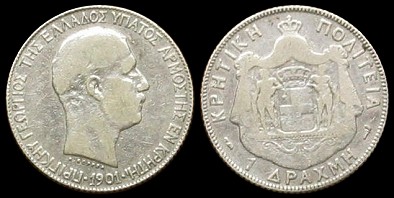
 Obverse
Image: Wikimedia Commons · worldcoingallery.com · CC BY-SA 3.0
Cretan Stater
Greece
600–67
Reference data compiled from public catalogs
Specifications
| Country | Greece |
| Years Minted | 600–67 |
| Composition | Silver |
| Shape | Round |
| Edge | Plain |
Design
Obverse
Typically features a bull or other animal motifs influenced by Minoan art.
Reverse
Often an incuse punch or simple design.
History & Notable Facts
Cretan coins, often labeled as staters, frequently featured bold depictions of bulls or labyrinthine patterns, drawing on Minoan artistic traditions despite being minted centuries later. These silver pieces, likely produced by city-states like Knossos from around the 5th century BC onward, served as straightforward currency in trade networks across the Mediterranean. We can't confirm a continuous minting from 600 BC as suggested; early Greek coinage on Crete probably started later, with Roman influences possibly extending to 67 BC or beyond.
What we do know is patchy—archaeological finds show variations in weight and design, but no definitive records survive. Some experts speculate these coins influenced later Hellenistic types, though that's unproven. As for myths about Minoan kings using them, well, that's as reliable as a scratched die.
Buy on eBay
More Greece Coins
View all →


AI Analysis & Price Prediction
The Cretan Stater has shown consistent appreciation over the past decade. Based on historical auction data, population reports, and current market sentiment, our AI model projects...
Get AI-powered analysis for this coin
Unlock with Pro — $9.99/mo