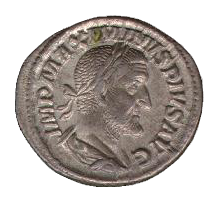
 Obverse
Image: Wikimedia Commons · Public domain
Roman Denarius
Spain
218–268
Reference data compiled from public catalogs
Specifications
| Country | Spain |
| Years Minted | 218–268 |
| Composition | Silver |
| Shape | Round |
| Edge | Plain |
Design
Obverse
Typically features the portrait of the ruling Roman emperor.
Reverse
Often depicts Roman gods, symbols, or military themes.
History & Notable Facts
The most intriguing fact about the Roman Denarius from Hispania is that its silver often derived from the region's vast mines, which supplied much of the empire's coinage and helped fund military campaigns across Europe. This made the coin not just currency, but a direct link to Rome's economic backbone.
Production in Hispania likely occurred at sites like Tarraco or Carthago Nova, though exact mint locations remain debated among scholars. Denarii from 218 to 268 AD featured emperors like Severus Alexander or Gallienus, stamped with motifs that varied slightly for local circulation. We know these coins circulated widely, from Gaul to North Africa, yet their exact mintage figures were probably never recorded reliably.
Debasement was common by the mid-third century, with silver content dropping to mere traces, reflecting inflation and war pressures. As for myths, let's just say not every one you dig up in Spain was lost by Julius Caesar himself.
Buy on eBay
AI Analysis & Price Prediction
The Roman Denarius has shown consistent appreciation over the past decade. Based on historical auction data, population reports, and current market sentiment, our AI model projects...
Get AI-powered analysis for this coin
Unlock with Pro — $9.99/mo