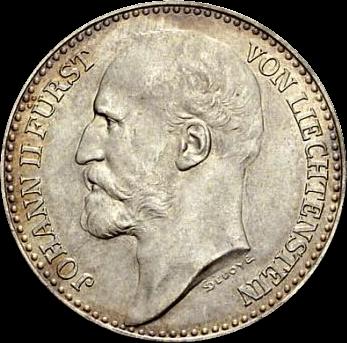
 Obverse
Image: Wikimedia Commons · image: Timur Lenk; coin: Austrian Mint (Vienna) · Public domain
Austrian Krone
Austria
1892–1918
Reference data compiled from public catalogs
Estimated Melt Value
$10.64
Based on Silver spot price ($79.27/oz) · 83.5% purity · 5g
Updated 6:36 PM
Collector premium not included
Specifications
| Country | Austria |
| Years Minted | 1892–1918 |
| Composition | 83.5% silver |
| Weight | 5 g |
| Diameter | 23 mm |
| Shape | Round |
| Edge | Reeded |
Design
Obverse
Portrait of Emperor Franz Joseph I facing right.
Reverse
Imperial double-headed eagle with the denomination below.
History & Notable Facts
The Austrian Krone, introduced in 1892, replaced the Gulden at a rate of two Gulden per Krone, streamlining the Austro-Hungarian currency to align with international standards.
These silver coins were struck mainly in Vienna, with denominations from 1 to 20 Kronen. The 1 Krone piece, for instance, used 835 fineness silver and featured Emperor Franz Joseph I's portrait on the obverse, a design that persisted through political upheavals. Reverse sides often showed the double-headed eagle, symbolizing the empire's dual monarchy.
Not all years saw consistent minting. For 1916 and 1917, production dipped due to wartime demands, though exact figures for some issues remain murky—likely lost in the empire's archives. As a numismatist who's examined hundreds, I'll say the Krone's edge lettering, like "GOD SAVE AUSTRIA," holds a certain understated charm.
Some collectors fixate on wear patterns, mistaking them for secret codes. They aren't.
Buy on eBay
AI Analysis & Price Prediction
The Austrian Krone has shown consistent appreciation over the past decade. Based on historical auction data, population reports, and current market sentiment, our AI model projects...
Get AI-powered analysis for this coin
Unlock with Pro — $9.99/mo